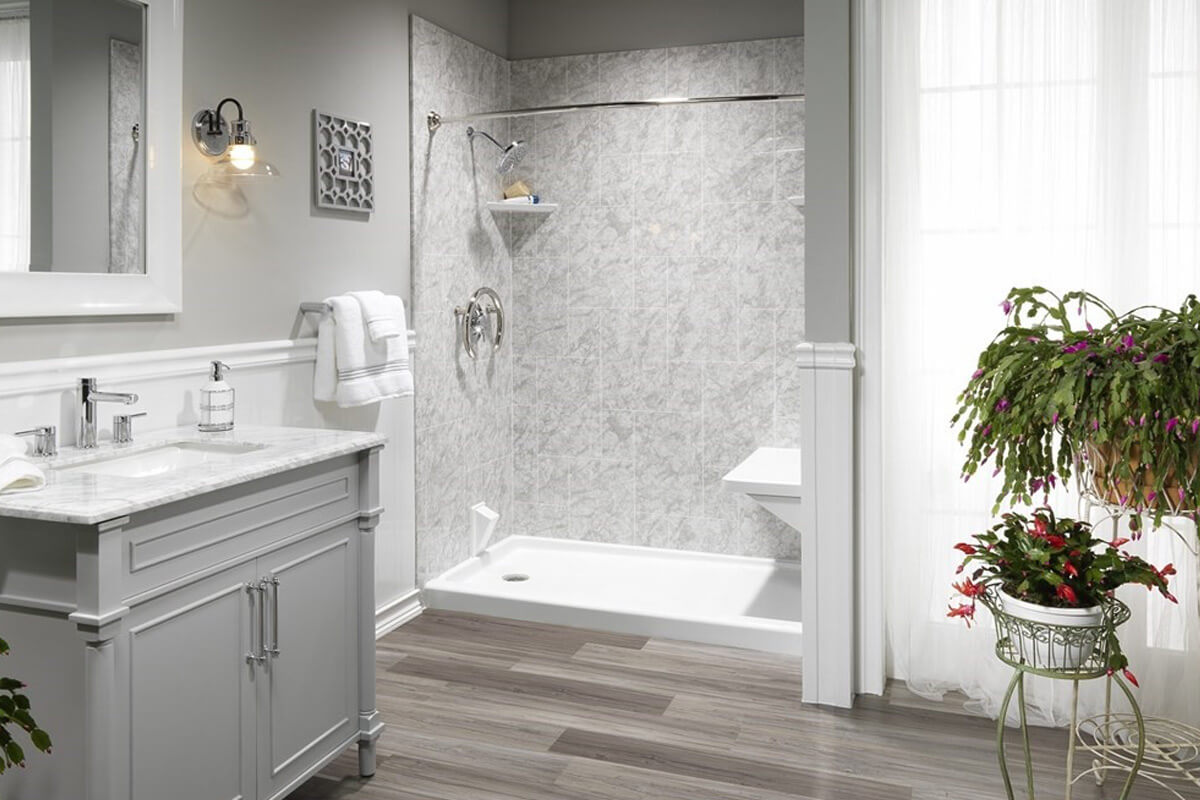

TL;DR: Solid surface and acrylic wall surrounds are both practical alternatives to traditional tiled shower walls. Solid surface offers a substantial feel, broad customization, and a nonporous finish, while acrylic is lightweight, easy to clean, and available in many styles. For a bathroom under 50 square feet, the right choice depends on the existing shower footprint, desired appearance, maintenance needs, installation requirements, and budget.
In a bathroom smaller than 50 square feet, the wrong shower wall material can make the space feel cramped, increase cleaning time and stretch your renovation budget. That makes choosing between solid surface vs. acrylic wall surrounds an important decision for Utah homeowners.
Both options provide a practical alternative to traditional tile, but they solve the problem differently. Solid surface creates a sturdy, custom-fitted wall system with a substantial appearance, while acrylic offers a lighter material with plenty of colors, patterns, and configurations.
Your best choice will depend on the size of your bathroom, your preferred style, maintenance expectations, and available budget.
Quick fact: In 2025, 73% of remodelers surveyed by the National Association of Home Builders rated bathroom remodeling as common to very common for their businesses.
Solid Surface vs. Acrylic: Key Material and Design Differences
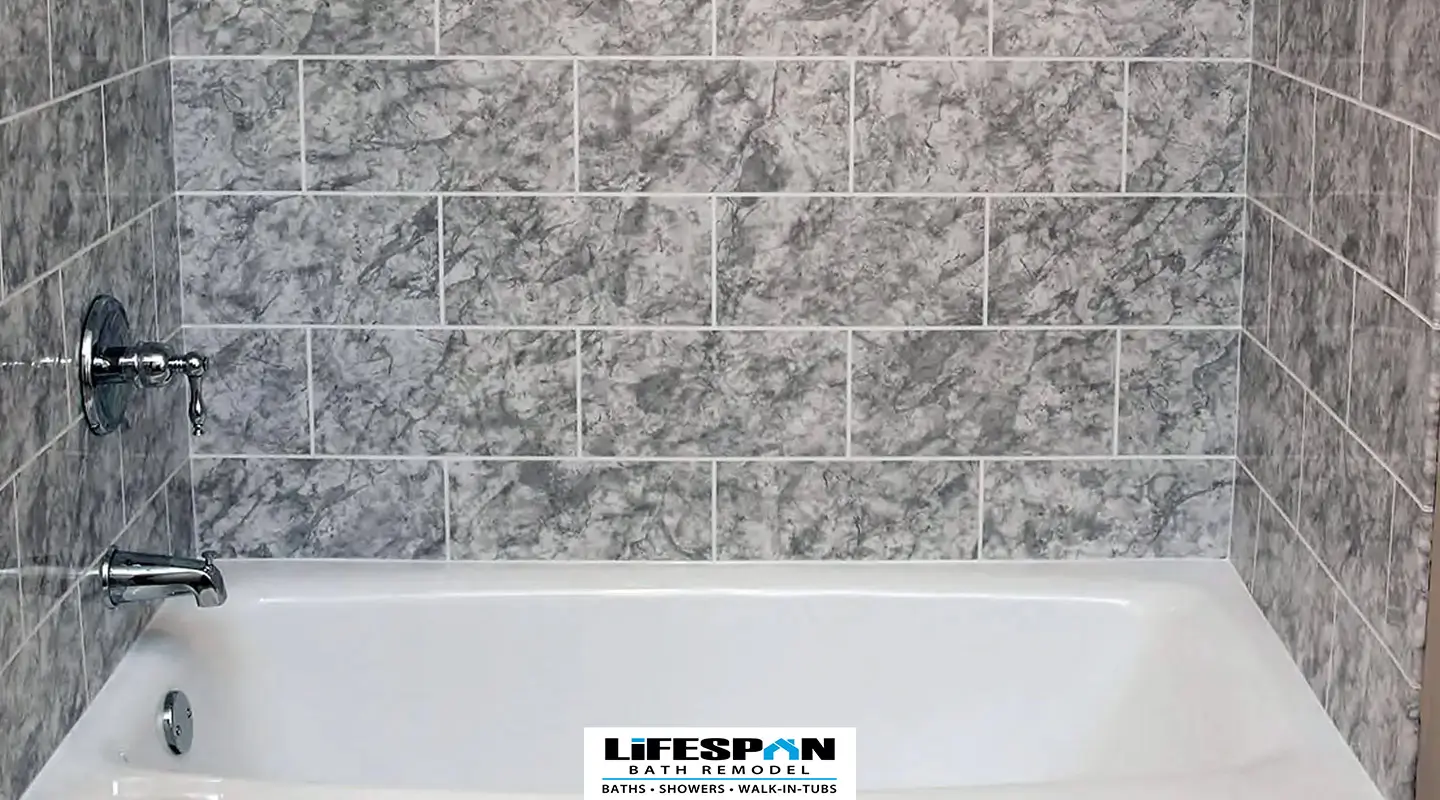
Solid surface and acrylic are manufactured wall materials designed to handle bathroom moisture. Both can be installed as panels, reducing or eliminating the grout lines found in traditional tile installations.
Solid surface panels are generally thicker and have a substantial feel. They can be fabricated in different shapes, colors, patterns, and configurations. Some products can also be repaired or refinished if the surface develops certain types of damage.
Acrylic is a lightweight material commonly used for tub and shower surrounds. It comes in a broad range of colors, patterns, textures, and configurations. Its lighter weight can make handling and installation more straightforward, depending on the product and project.
Solid Surface Wall Surrounds
Solid surface is a good fit for homeowners who want a more substantial wall system with plenty of design flexibility. Its nonporous surface can resist moisture penetration when properly installed, and the lack of grout lines simplifies routine cleaning.
Acrylic Wall Surrounds
Acrylic focuses on practicality. The panels are lightweight, smooth, and relatively easy to maintain. Many systems are designed around standard shower and tub configurations, making them useful for straightforward bathroom upgrades.
Quick Answer: Solid surface vs. acrylic wall surrounds comes down to material construction, design preferences, weight, customization, installation, maintenance, and project budget. Neither material is automatically right for every bathroom.
How Do Solid Surface and Acrylic Compare for Durability?
Shower walls are exposed to moisture, cleaning products, temperature changes, and everyday contact with bottles, fixtures, and people. Since these conditions repeat day after day, the material you choose can affect how well the walls hold up over time.
Solid surface has a dense, substantial construction that suits homeowners who want a durable wall finish for long-term use. If minor scratches or surface damage occur, some solid surface products can be repaired or refinished without replacing the entire panel.
Acrylic can also handle regular shower use when it is installed correctly and maintained with appropriate cleaning products. However, its surface may be more prone to scratches or damage from abrasive cleaners and rough handling, making everyday care particularly relevant.
Beyond the material itself, product thickness and manufacturer quality can affect durability. Proper installation and routine maintenance also influence how either option performs as the years go by.
In a small bathroom, these differences become even more relevant because replacing shower walls can involve removing fixtures and disrupting much of the surrounding space. Choosing a material suited to your household and maintenance habits can help reduce the need for major repairs or replacement later.
Which Looks Better in a Small Bathroom?
Appearance can have a noticeable effect on how a small bathroom feels, especially when the shower takes up a large portion of the available wall space. With less room to work with, the right finish can make the space feel cleaner and less visually crowded.
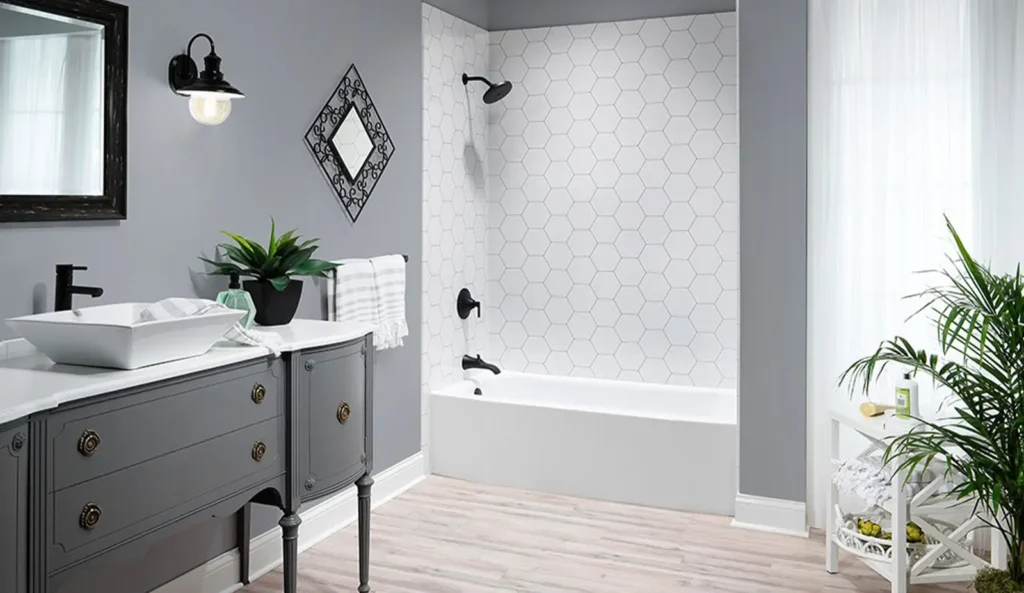
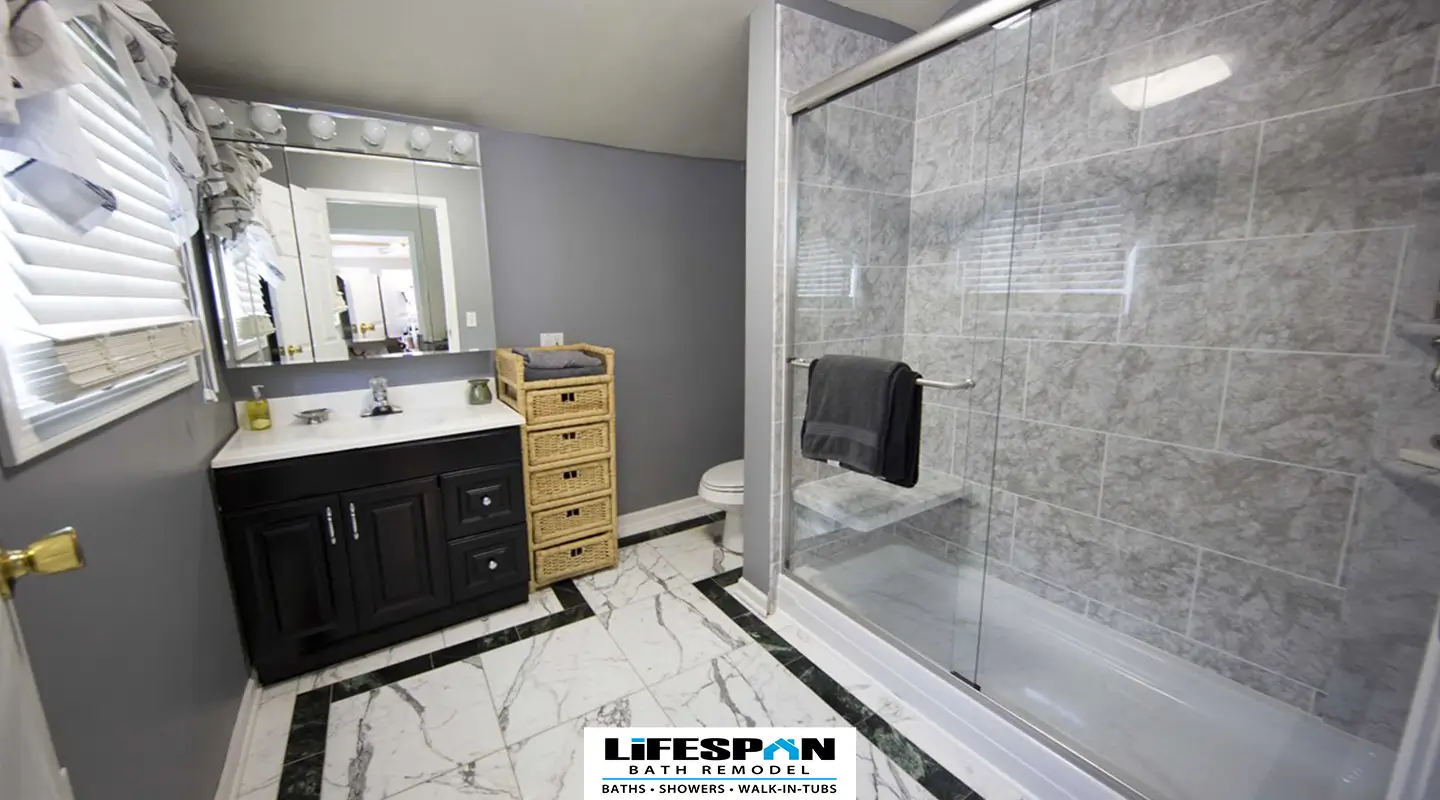
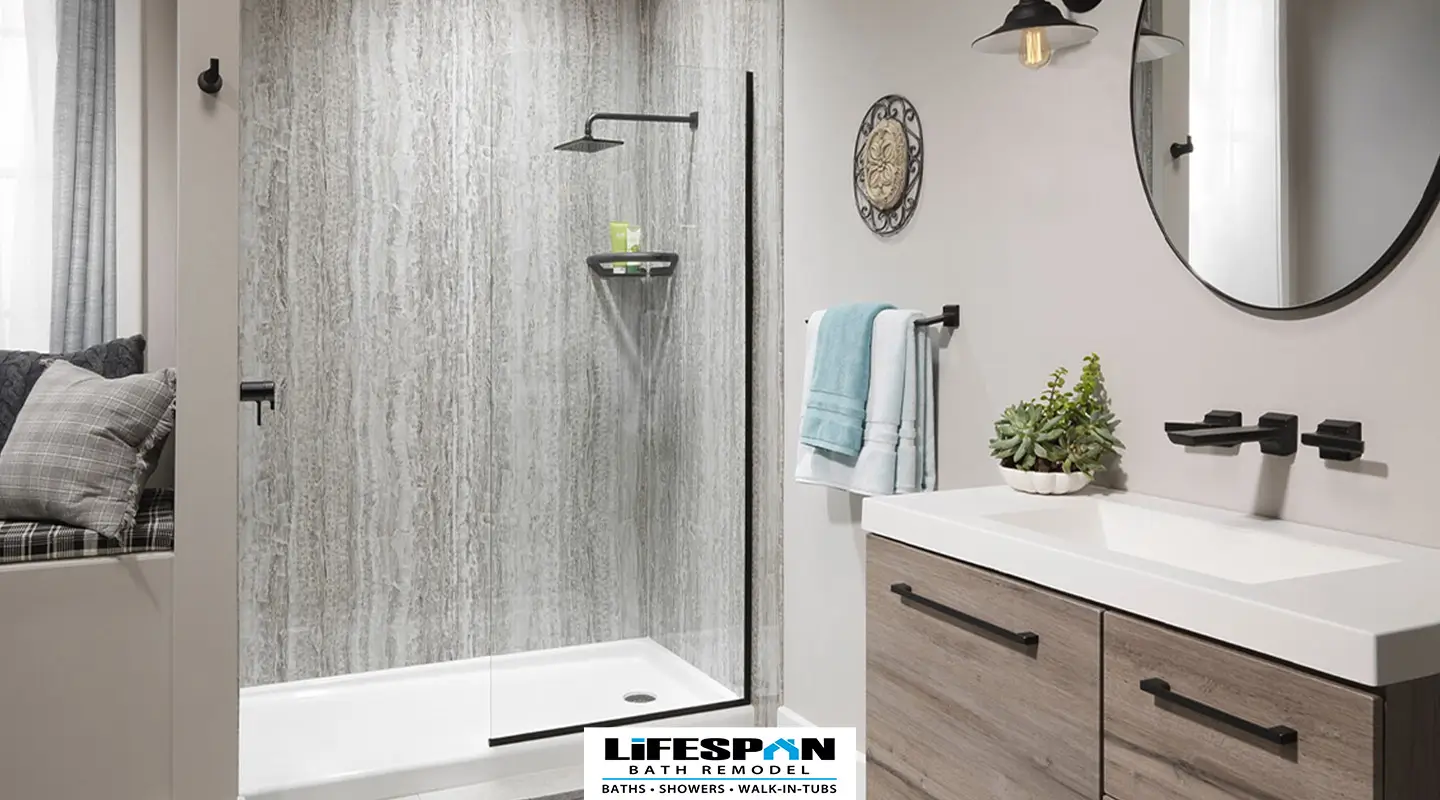
Solid surface gives homeowners plenty of design flexibility, with options that can resemble natural stone, marble and other upscale finishes. Because the panels are large and have fewer visible seams, they can also create a more continuous look. Acrylic, on the other hand, offers a different range of choices, with various colors, patterns and finishes, including designs that replicate the look of tile or stone.
That difference can matter in a bathroom under 50 square feet. Fewer grout lines and visual breaks can make the shower walls appear more continuous, which may help the room feel more spacious. Lighter colors can add to that effect by reflecting more available light, while simple patterns can keep the walls from looking busy.
Homeowners also tend to favor lighter shower-wall finishes. For instance, Houzz’s 2025 bathroom research found that white was used in 36% of renovated shower walls, making it the most popular color, followed by off-white at 18%.
These numbers show that clean, light-colored finishes remain a common design preference. Whether you choose solid surface or acrylic, a lighter finish with a restrained pattern can help maintain an open, uncluttered look in a compact shower.
Design Tip: For a bathroom under 50 square feet, consider lighter colors, larger panels, simple patterns, and clear glass to keep the shower from feeling visually crowded.
Solid Surface vs. Acrylic Shower Surrounds: Which Is Easier to Maintain?
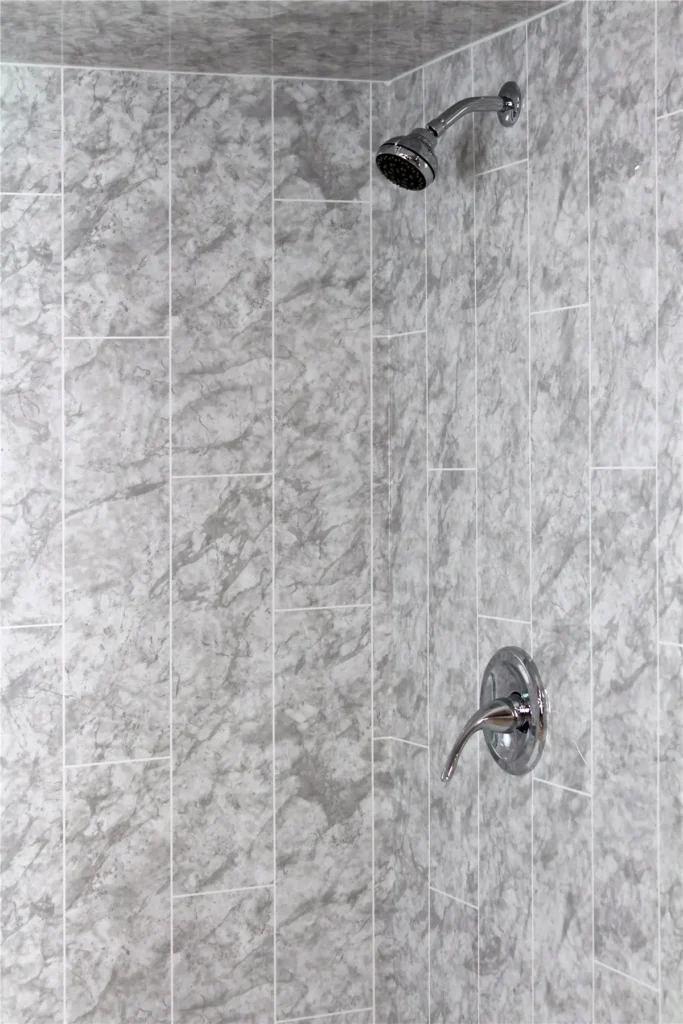
Traditional tile contains grout joints that require regular attention. Solid surface and acrylic panels can reduce those cleaning points because the main wall areas are continuous.
Solid surface is nonporous and does not require grout between large panels. Its smooth surface can make routine cleaning straightforward. Some finishes, though, may show water spots or mineral deposits more readily than others.
Acrylic is also relatively easy to clean. Homeowners should use cleaning products recommended by the manufacturer and avoid abrasive materials that could scratch the surface.
Maintenance Considerations for Solid Surface
- Smooth, nonporous surface
- Few or no grout joints
- Easy routine cleaning
- Some surface damage may be repairable, depending on the product
Maintenance Considerations for Acrylic
- Smooth, easy-clean surface
- No traditional grout maintenance across the main panels
- Lightweight material
- Requires care to avoid scratches and surface damage
What This Means For You: Maintenance is unlikely to be the deciding factor between the two. Both reduce grout cleaning compared with traditional tile, although acrylic requires additional care to avoid scratches from abrasive cleaners.
How Does Installation Differ Between Solid Surface and Acrylic?
Solid surface panels can be heavier and may require more handling during installation. Custom fabrication can also add preparation steps when the shower has unusual dimensions, corners, niches, or other design features.
Acrylic panels are lighter and can be easier to handle. Some systems are designed around common shower dimensions, which can simplify certain replacements.
That does not mean either material is a universal quick-install option. Wall condition, demolition, plumbing, shower-pan dimensions, corners, seams, and other details can affect the work.
Professional wall surround installation also requires careful attention to measurements and sealing around plumbing penetrations and other openings.
What Should You Measure Before Choosing a Surround?
Before choosing a surround for a small bathroom, measure:
- Existing shower width
- Shower depth
- Wall height
- Corner locations
- Shower entry width
- Door or glass clearance
- Plumbing locations
- Window locations
- Bench or grab-bar requirements
These measurements help determine which wall system can fit without creating unnecessary changes to the existing footprint.
Which Option Works Better for a Small Bathroom?
The wall material is only one factor in how spacious a shower feels. Layout, entry style, glass, storage, and wall design also shape the space.
For bathrooms under 50 square feet, keeping the existing plumbing layout can preserve floor space. Corner and alcove showers can also make better use of a compact footprint.
A low-curb or open-entry shower can make the room feel less enclosed. Small changes to the walls, entry, storage, and finishes can improve how the existing space looks and functions.
Before You Decide: Measure the existing shower before choosing a wall system. The panel needs to work with the available width, depth, height, plumbing, entry clearance, and planned shower features.

Solid Surface vs. Acrylic Bathroom Walls: What About Moisture Resistance?
Both materials are designed for wet environments, but the wall panel itself is only one part of moisture control.
A properly installed solid surface system can provide a nonporous wall finish that limits water absorption. Acrylic is also designed for bathroom moisture and can perform well when installed according to the manufacturer’s requirements.
The seams, corners, penetrations, substrate, and surrounding waterproofing system matter just as much as the panel material.
A wall surround should not be treated as a substitute for proper waterproofing. Water can reach areas around plumbing penetrations, corners, and joints if those details are not handled correctly.
Why Installation Quality Matters
A good installation should account for:
- Wall preparation
- Panel alignment
- Seams and corners
- Plumbing penetrations
- Sealants
- Shower-pan connections
- Manufacturer installation requirements
This is especially relevant in a small shower because fixtures, storage, and plumbing may be positioned close together.
Solid Surface vs. Acrylic Shower Surrounds: How Much Does Each Cost?
Cost varies depending on the wall system, shower dimensions, installation requirements, and overall scope of the project.
Acrylic is generally the more budget-friendly option, particularly for standard shower configurations. Solid surface typically costs more because the material is heavier and may require custom fabrication, specialty finishes, or additional installation work.
The wall panels are also only one part of the total project cost. Demolition, wall preparation, plumbing changes, shower-pan work, glass, fixtures, accessibility features, and labor can all affect the final price.
This makes it important to compare the complete scope of a bathroom remodel rather than focusing on the price of the wall material alone. A straightforward shower replacement using the existing footprint will have different requirements than a project involving plumbing changes, custom dimensions, new fixtures, or accessibility upgrades.
Budget Tip: Compare complete project scopes rather than panel prices alone. Ask what preparation, installation, plumbing, demolition, and finishing work are included in the estimate.
Solid Surface vs. Acrylic Bathroom Walls: Side-by-Side Comparison
Here is a side-by-side comparison of solid surface vs. acrylic bathroom walls:
| Factors | Solid Surface | Acrylic |
| Durability | Substantial construction; some surfaces can be repaired | Good everyday performance with proper care |
| Appearance | Broad range of custom and stone-inspired finishes | Wide range of colors, patterns, and textures |
| Maintenance | Low-maintenance and grout-free across main panels | Low-maintenance and grout-free across main panels |
| Weight | Generally heavier | Lightweight |
| Installation | May require more handling and fabrication | Often easier to handle |
| Moisture Resistance | Nonporous surface when properly installed | Designed for wet areas when properly installed |
| Customization | Strong customization potential | Many standard design options |
| Cost | Can increase with fabrication and customization | Generally the more budget-friendly option |
| Small-Bathroom Fit | Can be fabricated for specific dimensions | Many systems fit common configurations |
Which Wall Surround Should You Choose?
The right pick depends on your priorities. Weigh these points before deciding:
- Existing shower footprint
- Desired walk-in shower dimensions
- Maintenance preferences
- Design priorities
- Installation requirements
- Budget
- Accessibility features
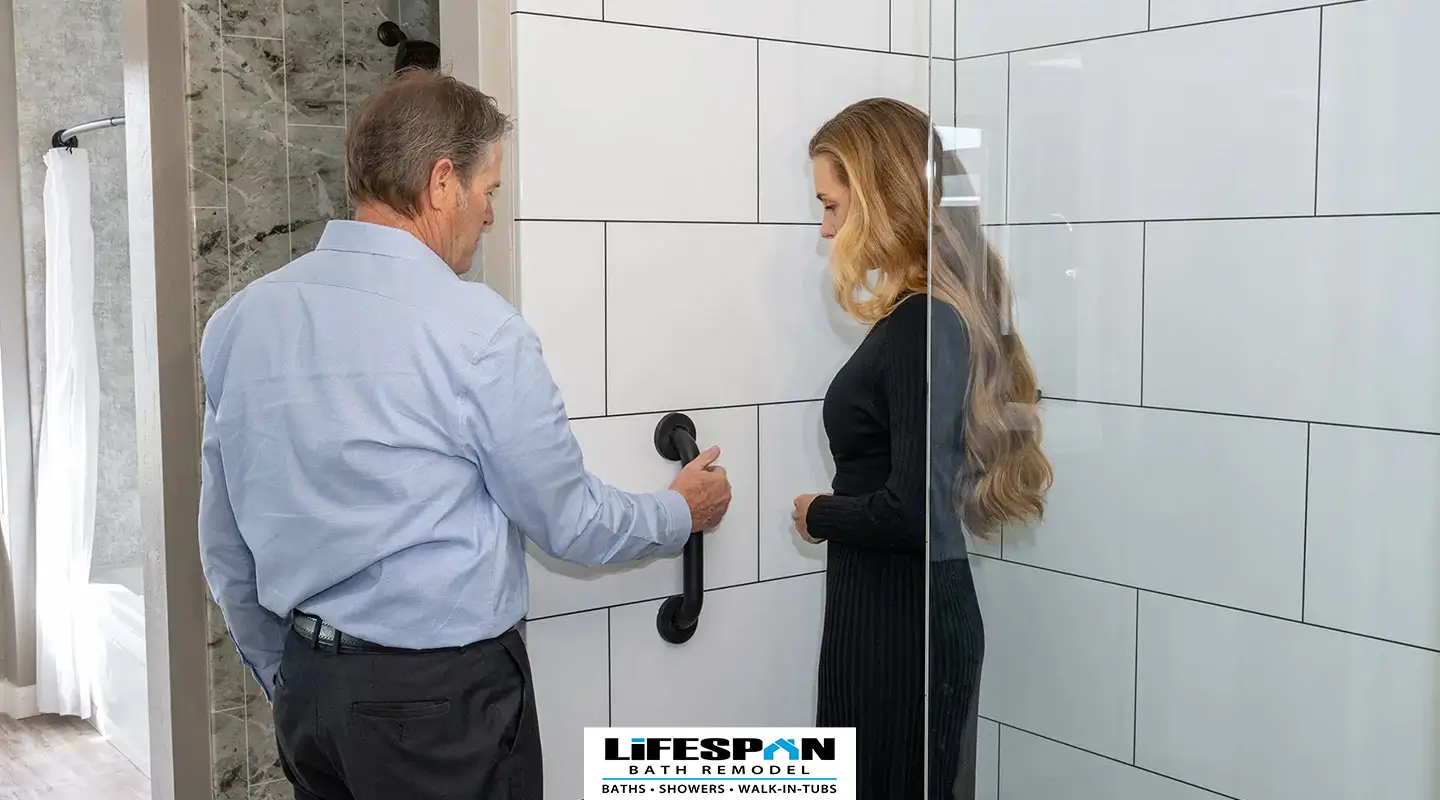
For Utah homeowners with small bathrooms, both materials can succeed when matched carefully to the space. Seniors and mobility-limited homeowners should also weigh grab-bar placement and low-threshold entry during planning.
Key Takeaway: The right wall surround depends on your shower dimensions, design preferences, maintenance expectations, installation requirements, and budget. Both materials can work well in a small bathroom when the surround is matched to the space and installed correctly.
Simplify Picking the Right Shower Wall Material for Your Bathroom
If you are considering a shower replacement or bathroom remodel in Salt Lake City or St. George, LifeSpan Home Improvement can help you explore options that suit your space and home.
With more than 30 years of bathroom remodeling experience, we work with Utah homeowners on projects ranging from shower replacements to complete bathroom updates. Our team can help you evaluate your existing layout and select a shower wall solution that fits your space, style, and everyday needs.
Frequently Asked Questions
Is a solid surface better than acrylic for shower walls?
Neither material is automatically better for every project. Solid surface offers a substantial construction and broad customization, while acrylic is lightweight and available in many practical designs. The best fit depends on the bathroom, budget, design preferences, and installation requirements.
What is the difference between solid surface and acrylic shower surrounds?
Solid surface is generally heavier and offers extensive fabrication and design options. Acrylic is lighter and commonly available in standard shower configurations. Both can provide low-maintenance shower walls when properly installed.
Are solid surface and acrylic bathroom walls waterproof?
Both are designed for bathroom moisture, but the wall panel alone does not create a complete waterproofing system. Seams, corners, plumbing penetrations, substrates, and connections also need appropriate treatment.
Can either wall surround work in a bathroom under 50 square feet?
Yes. Both can work in a small bathroom if the selected system fits the available shower width, depth, height, plumbing, and entry clearance. Measuring the existing footprint before selecting materials helps narrow the options.
Can I install a walk-in shower without changing the bathroom footprint?
In some bathrooms, a walk-in shower can use the existing footprint. Keeping plumbing and major dimensions in their current locations can simplify some projects, while the final configuration depends on the available space and existing construction.
How do I choose between solid surface and acrylic for my bathroom?
Start by comparing the existing shower dimensions, desired layout, maintenance preferences, appearance, installation requirements, and budget. Then compare specific products rather than judging the material category alone.
For Utah homeowners planning a small bathroom upgrade, LifeSpan Home Improvement can help evaluate the existing space and discuss wall, shower, and accessibility options based on the project’s specific requirements.
Questions? Talk to a Pro.
We beat any competitor by $100! Call for details. (801) 532-2000
Recent articles
Solid Surface vs. Acrylic Wall Surrounds: What’s the Difference?
Best Bathroom Materials for Utah Winters and Temperature Changes

How Winter Weather Can Affect Your Bathroom Remodel Timeline
7 Ways to Remodel a Bathroom Without Removing Tiles

5 Factors That Affect the Tub-to-Shower Conversion Timeline
What’s the Ideal Walk-In Shower Size for a Small Utah Bathroom
10 Factors to Consider Before Installing a Walk-In Shower
What Homeowners Should Know Before Choosing PuroStone for Their Shower Remodel
Related Posts
Matt Tychsen
November 24, 2026
Solid Surface vs. Acrylic Wall Surrounds: What’s the Difference?
TL;DR: Solid surface and acrylic wall surrounds are both practical alternatives to traditional tiled shower walls. Solid surface offers a substantial feel, broad...
November 19, 2026
Best Bathroom Materials for Utah Winters and Temperature Changes
A bathroom may take up only a few dozen square feet, but every surface has to withstand daily use. Floors need to handle...
November 10, 2026
How Winter Weather Can Affect Your Bathroom Remodel Timeline
A cold Utah morning does not have to put your bathroom renovation on hold. The concern about winter delays is reasonable, given that...