
TL;DR:
- Low-maintenance design focuses on reducing daily effort, not eliminating cleaning completely
- The right materials and layout choices can make a bathroom easier to manage
- Storage, ventilation, and surface selection all play a role in long-term upkeep
Some bathrooms feel harder to keep clean because their design traps moisture, soap residue, and clutter. Homeowners comparing bathroom remodeling considerations can reduce daily work by planning around easier cleaning, better airflow, useful storage, and durable materials from the start.
The Environmental Protection Agency notes that the bathroom is where over half of all water use inside a home takes place, which makes fixture choice, leak checks, and moisture control part of daily care, not just design preference.
Low maintenance does not mean no maintenance. It means fewer daily wipe-downs, less scrubbing, and fewer places where grime can collect. Good low-maintenance bathroom design works with real life: busy mornings, shared bathrooms, aging needs, and safe, simple cleaning.

What Makes a Bathroom Easier to Maintain?
A low-maintenance bathroom design starts with simple access. Every surface should be easy to see, reach, and wipe. If a bathroom has narrow gaps, deep ledges, or tight corners, cleaning takes more time and effort. The best layouts reduce those friction points from the start.
Before You Plan
Think about how the bathroom is used every day before choosing finishes or fixtures.
Consider:
- Who uses the space most often
- Which areas require frequent cleaning
- Where better organization could reduce daily clutter
Designing Around Everyday Cleaning Needs
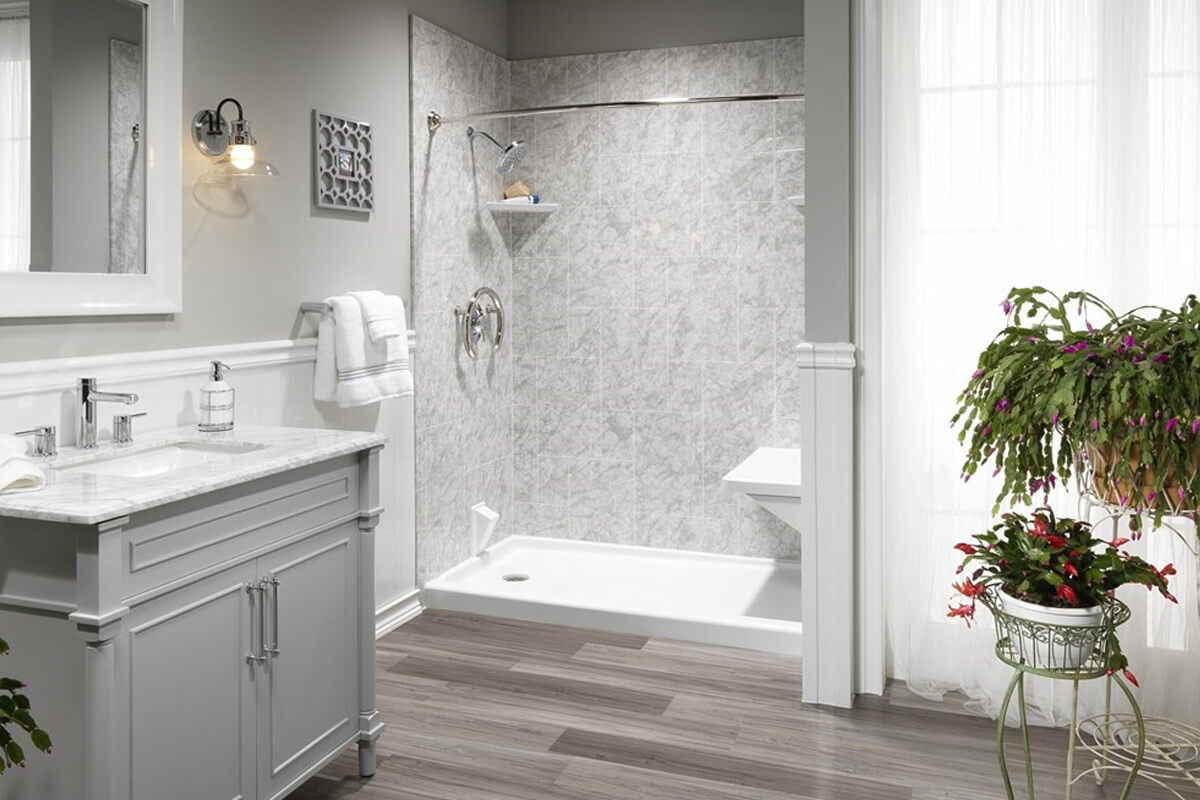
Daily cleaning should not require bending into odd spaces or moving many items first. A practical bathroom design for easy cleaning gives clear access to the shower, vanity, toilet, and floor. Wall-mounted storage, smooth surrounds, and a simple vanity zone can reduce dust and soap film.
Surfaces also need to fit the person using the space. Older adults or people with limited mobility may need fewer reach points and safer floor access. A lower shower threshold, open clearances, and easy-grip fixtures can support care without adding more cleaning work.
Choosing Surfaces That Are Simple to Clean
The easiest surfaces are smooth, sealed, and compatible with mild cleaners. Shower walls, counters, and floors see the most contact, so they deserve the most care during planning. Fewer seams can mean less residue in wet zones.
Grout is a common cleaning concern. Tile can look great, but small tiles create more grout lines. Large panels, larger tile formats, and solid surfaces can reduce scrubbing. Any surface still needs the right cleaner, so manufacturer care rules should guide daily and weekly care.
Why This Matters: A beautiful bathroom can still become difficult to maintain if the materials and layout do not match everyday routines. Choosing practical features early can help prevent extra work later.
Which Low Maintenance Bathroom Features Make the Biggest Difference?
The best low-maintenance bathroom features reduce cleaning in high-use areas first. The shower, vanity, and fixtures usually create the most visible residue. Changing these zones can bring a clear drop in daily work.
Easy-Clean Shower Walls and Surrounds
Large format shower walls and surrounds reduce grout, which makes them easier to wipe after use. They also create fewer seams where soap residue can sit. A squeegee can still help, but the wall surface does not fight the cleaning process.
Shower doors also affect upkeep. Frameless or low frame designs have fewer tracks than older framed doors. Corners should be easy to reach, and shelves should drain well. Recessed niches can keep bottles off the floor while keeping the wall plane cleaner.
| Shower Surface Option | Best For | Care Level | Key Trade-off |
| Small tile | Detailed designs | Higher | More grout to scrub |
| Large-format tile | Fewer grout lines | Medium | Still needs grout care |
| Solid wall panels | Fast wipe-downs | Lower | Fewer design joints |
| Natural stone | High-end look | Higher | Needs sealing and careful cleaners |
Practical Storage That Keeps Surfaces Clear
Storage has a direct effect on cleaning. A counter filled with bottles, tools, and towels takes longer to wipe. Drawers, closed cabinets, and recessed niches keep daily items nearby without crowding the sink or shower floor.
Storage should match the routine. A family bathroom may need deep drawers and divided bins. A guest bath may need one closed cabinet and a clean counter. In a primary bath, separate drawer zones can keep grooming items off wet surfaces.
Smart Choice Tip: Good storage is not only about having more space. It is about keeping frequently used items organized and away from surfaces that need regular cleaning.
Efficient Fixtures and Fittings
Easy-to-clean faucets, showerheads, and drains can reduce mineral deposits and water spots. Simple fixture forms are easier to wipe than ornate shapes with grooves and seams. Smooth handles, simple trim plates, and accessible drains can also cut cleaning time.
Water-efficient fixtures can support lower upkeep. WaterSense-labeled products help limit waste, and leak checks can stop small drips before they stain surfaces. The EPA notes that household leaks can waste significant amounts of water over time, making early leak detection another part of routine bathroom maintenance.
How Can Bathroom Design Improve Daily Cleaning?
A low-maintenance bathroom is easier to clean because the room is easier to reach, dry, and reset. The design should reduce hidden residue and give moisture a clear path out of the room. Layout and air movement matter as much as surface choice.
Reducing Hard-to-Reach Areas
Hard-to-reach areas slow down cleaning. Wide gaps beside vanities, deep tub decks, and extra ledges collect dust. Tight toilet spaces can also make floor cleaning awkward. These features may look fine at first, but they add work over time.
Plan the shower, vanity, and toilet with access in mind. A shower with open corners, a vanity with toe-kick access, and a toilet area with room for a mop can make weekly care faster. Simple trim and fewer ledges also help. A bathroom remodeling services team walks through exactly these access points during a design consultation, before any material gets chosen.

Creating Better Ventilation and Moisture Control
Moisture control reduces mold risk and surface damage. A properly sized bath fan can pull humid air out after showers. It should vent outdoors, not into an attic or wall space. A timer switch can help the fan run long enough after use.
Lighting also helps with moisture care. A bright room makes water spots, leaks, and mildew easier to see early. Steady air movement helps the bathroom dry after daily use, which supports cleaner walls, floors, and fixtures.
What To Look For
A bathroom that stays cleaner over time usually has:
- Good airflow after showers
- Surfaces that dry quickly
- Materials that handle regular use
- Easy access for routine cleaning
Choosing Flooring for Easy Care
Bathroom flooring should resist water, clean well, and provide slip resistance. Large format porcelain tile, sheet vinyl, and other water-resistant floors can work well when installed with proper seams and edges. The right choice depends on budget, use, and comfort.
Grout size matters on floors too. Less grout can reduce scrubbing, but the floor should still have enough grip. Glossy floors can be slick when wet. A low-sheen surface with good traction gives a better mix of safety and easy care.
What Should You Consider When Planning a Low-Maintenance Bathroom?
Planning a low-maintenance bathroom remodel means judging each choice by daily use. A product can look beautiful in a sample and still require more care than a household wants. The best plan weighs style, cleaning, and long-term use together.
A Few Things To Keep In Mind
The easiest bathroom to maintain is not always the one with the most features. Focus on choices that fit your household habits, cleaning preferences, and long-term needs.
Balancing Appearance With Practicality
Some materials need more care than others. Natural stone can be beautiful, but it may need sealing and specific cleaners. Heavily textured tile may hide water spots, but it can trap soap film. A simpler surface can still look polished while cleaning faster.
Homeowners should think through real routines. A shower used by several people every morning needs different surfaces than a guest bath used a few times each month. The best visual choice should also fit the cleaning schedule.
Considering Household Needs and Daily Routines
A family bathroom may need closed storage, tough flooring, and easy-to-wipe walls. A primary bath may benefit from a larger shower, better light, and a low-threshold entry. A guest bath may need fewer upgrades but better storage and ventilation.
Children, pets, older adults, and frequent guests all change the cleaning load. A bathroom used by a person with limited mobility should reduce bending and reaching. Grab bars, a clear floor path, and simple shower access can support safer care.
Planning for Long-Term Maintenance
Long-term care includes cleaning, repairs, part access, and future needs. Fixtures should have parts that can be serviced. Surfaces should resist staining and moisture damage. Storage should still work as needs change.
The budget also belongs in the plan. According to NerdWallet’s coverage of national remodeling data, a bathroom remodel typically costs around $6,600 to $18,000, though an extensive high-end remodel can run well past that depending on scope. That wide range shows why practical priorities can help guide scope before a single material gets picked.
How Can Low Maintenance Bathroom Ideas Support a Bathroom Remodel?
Low-maintenance ideas support a bathroom remodel by focusing money and effort where they reduce the most daily work. A full change is not always needed. The right updates can target the areas that cause repeat cleaning problems.
How It Comes Together
A low-maintenance bathroom works best when individual improvements support each other. Easy-clean surfaces, organized storage, and moisture control together create a space that requires less daily effort.
Updating the Features That Cause the Most Maintenance
Start with the shower if grout, tracks, or corners take the most time. Then review storage, ventilation, flooring, and fixtures. These areas usually affect daily cleaning more than purely decorative items.
A vanity swap may help if counters stay crowded. A better fan may help if mirrors stay wet and walls feel damp. New flooring may help if old grout stains or cracked seams trap dirt. Each update should solve a clear care problem.
Combining Design Improvements During Remodeling
Several small design choices can work together. Smooth shower walls, a recessed niche, better fan control, and closed vanity storage all reduce daily tasks. None removes cleaning, but each one reduces extra work.
Homeowners weighing daily care against resale should know that mid-range bathroom updates consistently perform well here. NerdWallet’s reporting on the Remodeling Cost vs. Value Report notes that mid-range bathroom remodels can recoup up to roughly 80 percent of their cost through added home value. Resale can be one factor, but daily comfort should still guide final choices.
What Are the Best Low-Maintenance Bathroom Ideas to Start With?
The best low-maintenance bathroom ideas start with the areas that get wet, touched, and used every day. A short list can help homeowners sort choices before a remodel or smaller update.
- Simplifying the shower area: Choose shower walls with fewer seams. Keep storage off the shower floor with a recessed niche or corner shelf that drains well. Select a door or entry style with fewer tracks and easy reach points.
- Improving storage and organization: Use drawers, dividers, and closed cabinets to keep counters clear. Store daily items near the sink or shower, but not on surfaces that need frequent wiping. A simple storage plan can cut several small daily tasks.
- Choosing durable, easy-care materials: Pick materials that match the cleaning routine. Smooth surrounds, sealed counters, and water-resistant floors can reduce scrubbing. Avoid surfaces that need special cleaners unless the household is ready for that care.
- Improving ventilation and lighting: A strong bath fan and bright light help keep the room dry and easy to inspect. Timer switches, clear fan grilles, and proper vent paths support better moisture control. Good light also makes cleaning faster and more accurate.
How Can Professional Bathroom Remodeling Help Create a Lower-Maintenance Space?
A professional bathroom remodeling service can identify the areas that create the most upkeep. A trained remodeler can review the layout, moisture signs, shower access, fixture placement, and storage needs before work starts. This helps connect design choices with the way the room is used each day.

Material selection also benefits from field knowledge. Bathroom remodeling experts can compare wall surrounds, flooring, grout choices, ventilation needs, and fixture styles in one plan.
The remodeling field is broad, so careful vetting helps. Clear questions about materials, access, ventilation, and care needs can help homeowners compare their options more effectively.
Key Takeaway
The best low-maintenance bathroom designs balance style and practicality. Thoughtful planning around materials, storage, and moisture control can help create a space that stays easier to clean and comfortable to use.
Making Everyday Bathroom Care Easier
A lower-maintenance bathroom starts with simple ideas: fewer seams, clear storage, better moisture control, and surfaces that fit daily life. Good design reduces extra scrubbing without giving up comfort or style. It also helps the bathroom stay safer for older adults, guests, and busy families.
For Utah homeowners planning next steps, the most useful review starts with the parts of the room that cause repeat work. LifeSpan Home Improvement can help Utah homeowners evaluate bathroom remodeling solutions with easier daily care in mind.
For personalized guidance on creating a lower-maintenance bathroom, contact us to discuss your remodeling needs and design options.
Frequently Asked Questions
What is a low-maintenance bathroom design?
A low-maintenance bathroom design uses surfaces, storage, and layouts that reduce daily cleaning effort. It focuses on fewer grout lines, easy reach points, moisture control, and durable materials. The room still needs care, but the work becomes simpler.
Which bathroom surfaces are easiest to clean?
Smooth, nonporous surfaces are usually the easiest to clean. Solid shower panels, sealed counters, and large-format tile can reduce scrubbing. Always follow the care guide for each material to avoid damage.
How can I reduce grout and simplify bathroom cleaning?
Use larger tiles, solid wall panels, or shower surrounds with fewer seams. Less grout means fewer lines where soap residue and mildew can collect. Good ventilation and routine wipe-downs still help keep surfaces cleaner.
What bathroom features require the least maintenance?
Features with smooth forms and fewer seams tend to need less care. Examples include easy-to-clean shower walls, simple faucets, closed vanity storage, and water-resistant flooring. Avoid deep grooves, extra ledges, and hard-to-reach corners.
Is a low-maintenance bathroom more expensive to remodel?
A low-maintenance bathroom is not always more costly. Some choices cost more upfront, while others come from smarter layout planning. The best value comes from spending on the areas that reduce the most daily upkeep.
Does better ventilation really cut down on cleaning?
Yes. Better ventilation helps remove humid air after showers, which reduces mildew growth, damp walls, and lingering moisture. A fan timer can help the fan run long enough after each use, so the room dries fully instead of staying damp between showers.
Questions? Talk to a Pro.
We beat any competitor by $100! Call for details. (801) 532-2000
Recent articles
What Bathroom Design Features Help Reduce Daily Maintenance?

What Causes Bathroom Remodeling Projects to Fail and How Can Homeowners Avoid Them?

What Are the Best Bathroom Upgrades for Aging Parents Living at Home?
7 Ways to Increase Bathroom Space When Remodeling

Which Bathroom Safety Features Prevent the Most Falls for Seniors?

What Should You Prioritize When Planning a Full Bathroom Remodel?

The Three F’s of Modern Bathroom Design: Functionality, Flow, and Finishing Details
Wall Surrounds vs. Traditional Tile: Which is Better for Your Bathroom?
Related Posts
Matt Tychsen
September 16, 2026
What Bathroom Design Features Help Reduce Daily Maintenance?
Some bathrooms feel harder to keep clean because their design traps moisture, soap residue, and clutter. Homeowners comparing bathroom remodeling considerations can reduce...
September 8, 2026
What Causes Bathroom Remodeling Projects to Fail and How Can Homeowners Avoid Them?
TL;DR: Bathroom remodels often fail because of poor planning, unrealistic budgets, rushed decisions, wrong material choices, and unclear communication. A successful remodel starts...
September 2, 2026
What Are the Best Bathroom Upgrades for Aging Parents Living at Home?
The bathroom may be one of the first places where aging becomes noticeable at home. A parent who once stepped into a tub...