A bathroom remodel should feel like an upgrade, not something you worry about a few years later.
The thing is, many Utah homeowners don’t realize that tile, grout, and fixtures don’t actually protect their bathroom from water. What matters most is what’s installed underneath.
Without proper waterproofing, moisture seeps behind surfaces, leading to mold growth, structural damage, and costly repairs that often go unnoticed until the problem spreads.
Research shows that water intrusion can degrade building materials and compromise structural performance over time. Moisture-related damage, often called hygrothermal damage, affects materials at a structural level, reducing their strength and long-term durability.
If you’re planning a bathroom remodel, understanding how waterproofing works (and why it matters so much in Utah’s climate) can protect your investment for years to come.
What Bathroom Remodel Waterproofing Actually Does
Bathroom remodel waterproofing is the process of creating a complete waterproof barrier beneath your finished surfaces. This includes installing a waterproofing membrane, sealing transitions, and protecting every wet area where water exposure is constant.
A properly built waterproof bathroom prevents water from reaching:
- The subfloor beneath your bathroom floor
- Framing behind shower walls
- Areas around plumbing fixtures
- Seams, corners, and grout lines
Even materials like porcelain tile and grout are not fully waterproof. Water can pass through them over time, especially in high-use areas like a walk-in shower.
That’s why waterproofing systems are designed to stop moisture before it ever reaches the structure.
Why Proper Waterproofing Matters Long Term
Water exposure in a bathroom is constant. From daily showers to high humidity levels and minor splashes, moisture is always present in these naturally wet environments.
Without proper waterproofing in place, that moisture will eventually find its way into the areas you can’t see.
Prevent Structural Damage Before It Starts
When moisture seeps into the entire floor or behind walls, it can lead to rot, warping, and long-term structural damage. Over time, this weakens the structural integrity of your home and can require major reconstruction.
Proper waterproofing protects the materials you don’t see, so your remodel holds up for decades.
Reduce the Risk of Mold Growth
Warm, damp spaces create the perfect conditions for mold. In fact, Infection Control Today reports that mold is especially concentrated in bathrooms, with studies finding it in nearly half of shower grout and the walls above showers.
Without a waterproof barrier, water trapped behind tile or inside walls allows mold growth to spread out of sight. This can affect indoor air quality and lead to expensive remediation.
A sealed, waterproof bathroom limits moisture buildup and helps keep those hidden spaces dry.
Helps You Avoid Costly Repairs
Fixing water damage is rarely simple. What starts as a small leak can turn into:
- Replacing sections of the bathroom floor
- Rebuilding a damaged shower pan
- Removing and reinstalling tile
- Addressing framing or subfloor damage
These types of issues often lead to costly structural repairs that far exceed the original cost of doing waterproofing correctly the first time. In 2026, Angi reports that the normal range for water damage restoration falls between $1,384 and $6,384, and that excludes severe damage.
Extends the Life of Your Bathroom Renovation
A bathroom renovation is a major investment. Waterproofing systems help protect that investment by preventing premature wear and hidden damage.
Instead of dealing with cracked grout lines, loose tile, or soft flooring, your bathroom stays solid, clean, and functional longer.
The Most Important Areas to Waterproof
Not every part of a bathroom sees the same level of moisture. The focus should always be on high-risk wet zones.
These include:
Shower Walls and Tub Surrounds
Shower walls and any tub surround face constant water exposure. These areas require a continuous waterproofing membrane behind tile and over cement board to prevent leaks.
Shower Pan and Floor Transitions
The shower pan is one of the most critical components in a waterproof bathroom. If this area fails, water can travel beneath the entire floor. Proper slope, sealing, and membrane installation are essential to direct water to the drain.
Bathroom Floor and Entire Floor Coverage
Water doesn’t stay in one place. Splashes, humidity, and minor leaks spread across the bathroom floor.
That’s why many modern waterproofing systems extend beyond the shower to protect the entire floor, especially in homes with heated floors or open-concept designs.
Around Plumbing Fixtures
Every penetration (sinks, toilets, and valves) creates a potential entry point for water. Sealing around plumbing fixtures helps prevent slow leaks that can go unnoticed for months.
Types of Waterproofing Systems Used in Modern Remodels
Not all waterproofing methods are the same. The right approach depends on your layout, materials, and usage.
Waterproofing Membranes
A waterproofing membrane is the core of most systems. It can be applied as:
- Sheet membranes (installed under tile)
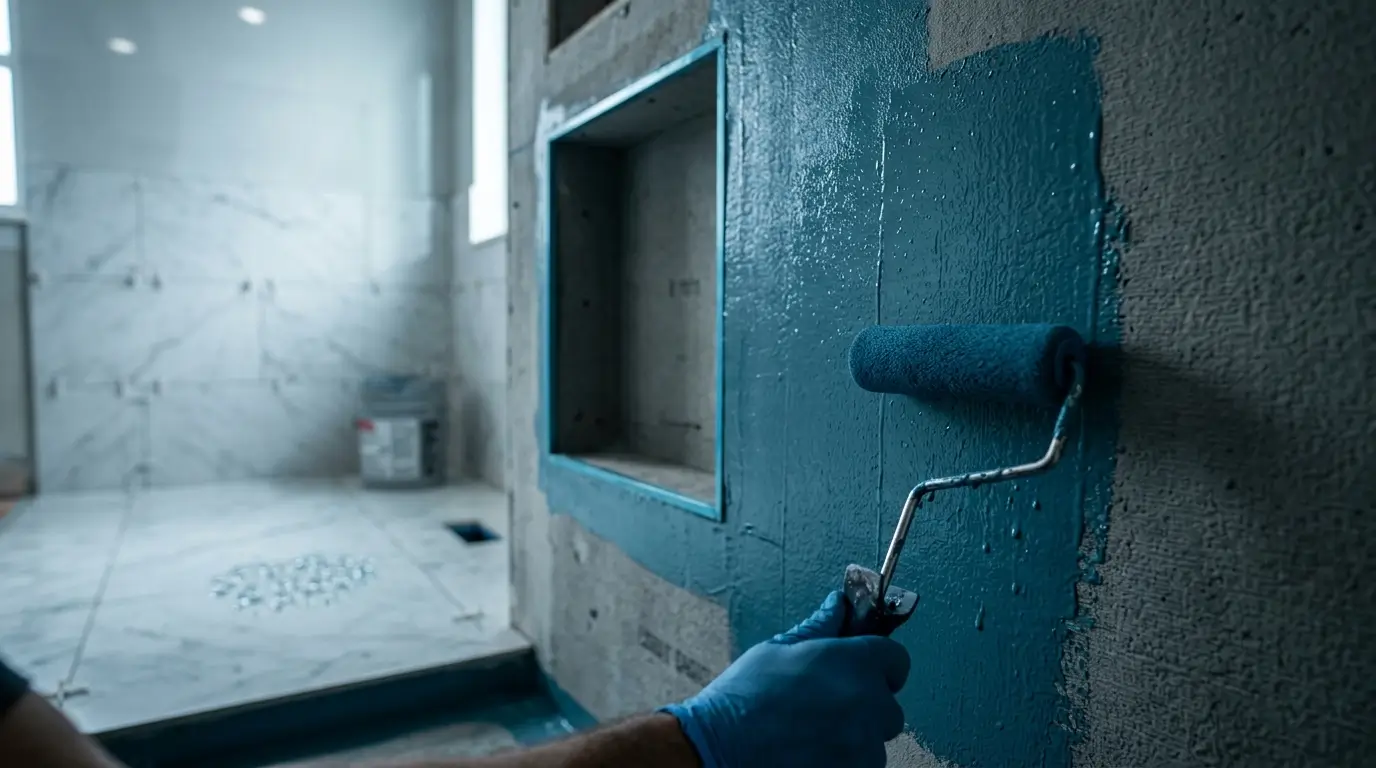
- Liquid membranes (rolled or brushed on surfaces)
Liquid membranes are especially useful for covering seams, corners, and irregular shapes.
Cement Board and Backer Systems
Cement board replaces traditional drywall in wet areas. It resists moisture and provides a stable base for tile, but it still requires a waterproof barrier to protect the structure fully.
Sealants and Grout Protection
Grout lines are porous, which means water can pass through them over time. Applying grout sealer adds an extra layer of moisture protection, helping maintain a waterproof bathroom after remodeling.
Common Waterproofing Mistakes to Avoid
Even a well-designed bathroom can fail if waterproofing is done incorrectly.
Some of the most common issues include:
- Skipping waterproofing behind tile
- Not sealing seams and corners
- Improper installation of the shower pan
- Relying only on tile or grout for protection
- Incomplete coverage in wet zones
These mistakes allow moisture to bypass the system, leading to hidden damage.
Why Professional Installation Makes the Difference
Every layer of waterproofing materials must be installed correctly, from the waterproofing membrane beneath the tile to the final surface you see every day. Even small gaps, poorly sealed seams, or missed transitions around corners and plumbing fixtures can allow moisture to bypass the system entirely.
Once that happens, water can travel behind walls, beneath the bathroom floor, or into surrounding materials without any visible signs until damage has already started.
Professional installation addresses these risks from the start. An experienced team understands how to properly waterproof each wet area, including shower walls, the shower pan, and the entire floor where water exposure is likely.
They also know how to apply and integrate different waterproofing systems so that each layer works together as a continuous waterproof barrier, rather than relying on isolated materials that leave vulnerable gaps.
Just as important, waterproofing is built into the overall design of the bathroom, rather than treated as a final step. From selecting the right materials, such as cement board and liquid membranes, to planning around plumbing fixtures and transitions, every detail is considered early in the process.
This approach helps create a fully waterproof bathroom that protects against moisture intrusion, reduces the risk of mold growth, and supports the long-term structural integrity of the space.
Let’s Build a Waterproof Bathroom That Lasts
A great bathroom remodel goes beyond finishes. What’s behind the tile is what determines how long your space holds up.
At Lifespan Bath Remodel, we design every bathroom renovation with long-term durability in mind. From the shower pan to the entire floor, we install waterproofing systems that protect your home from moisture, mold, and structural damage.
If you’re planning a remodel, don’t leave waterproofing to chance. Let our team help you build a waterproof bathroom that performs as great as it looks. Schedule a consultation with Lifespan today and get a bathroom built to last.
Questions? Talk to a Pro.
We beat any competitor by $100! Call for details. (801) 532-2000
Recent articles
What Homeowners Should Know Before Choosing PuroStone for Their Shower Remodel
How to Decide If Your Bathroom Needs a Partial Upgrade or a Full Bathroom Remodel

What Bathroom Design Features Help Reduce Daily Maintenance?
What Causes Bathroom Remodeling Projects to Fail and How Can Homeowners Avoid Them?

What Are the Best Bathroom Upgrades for Aging Parents Living at Home?
7 Ways to Increase Bathroom Space When Remodeling

Which Bathroom Safety Features Prevent the Most Falls for Seniors?

What Should You Prioritize When Planning a Full Bathroom Remodel?
Related Posts
Matt Tychsen
October 1, 2026
What Homeowners Should Know Before Choosing PuroStone for Their Shower Remodel
TL;DR: Is PuroStone a Good Choice for a Shower Remodel? PuroStone may appeal to homeowners who want a clean shower look, fewer visible...
September 22, 2026
How to Decide If Your Bathroom Needs a Partial Upgrade or a Full Bathroom Remodel
Not every dated bathroom needs to be completely torn apart. Sometimes a few well-chosen updates can make the space feel new again. Other...
September 16, 2026
What Bathroom Design Features Help Reduce Daily Maintenance?
Some bathrooms feel harder to keep clean because their design traps moisture, soap residue, and clutter. Homeowners comparing bathroom remodeling considerations can reduce...