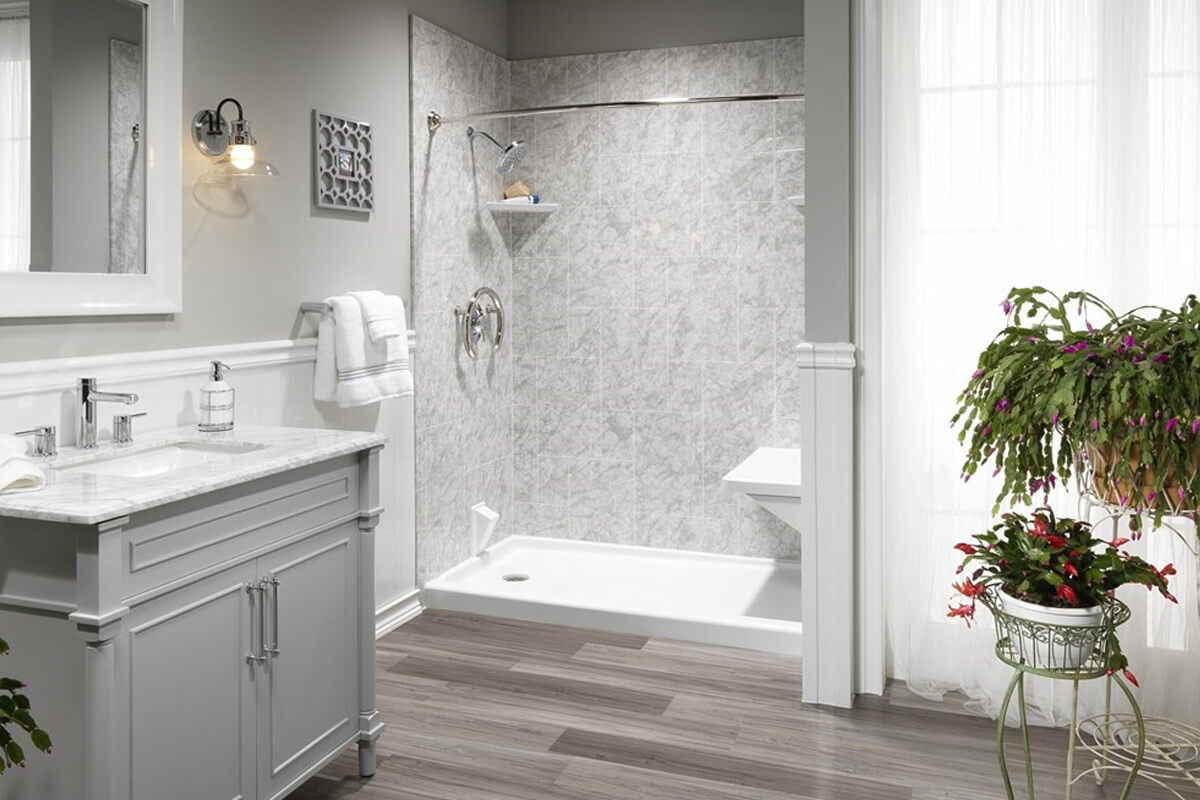
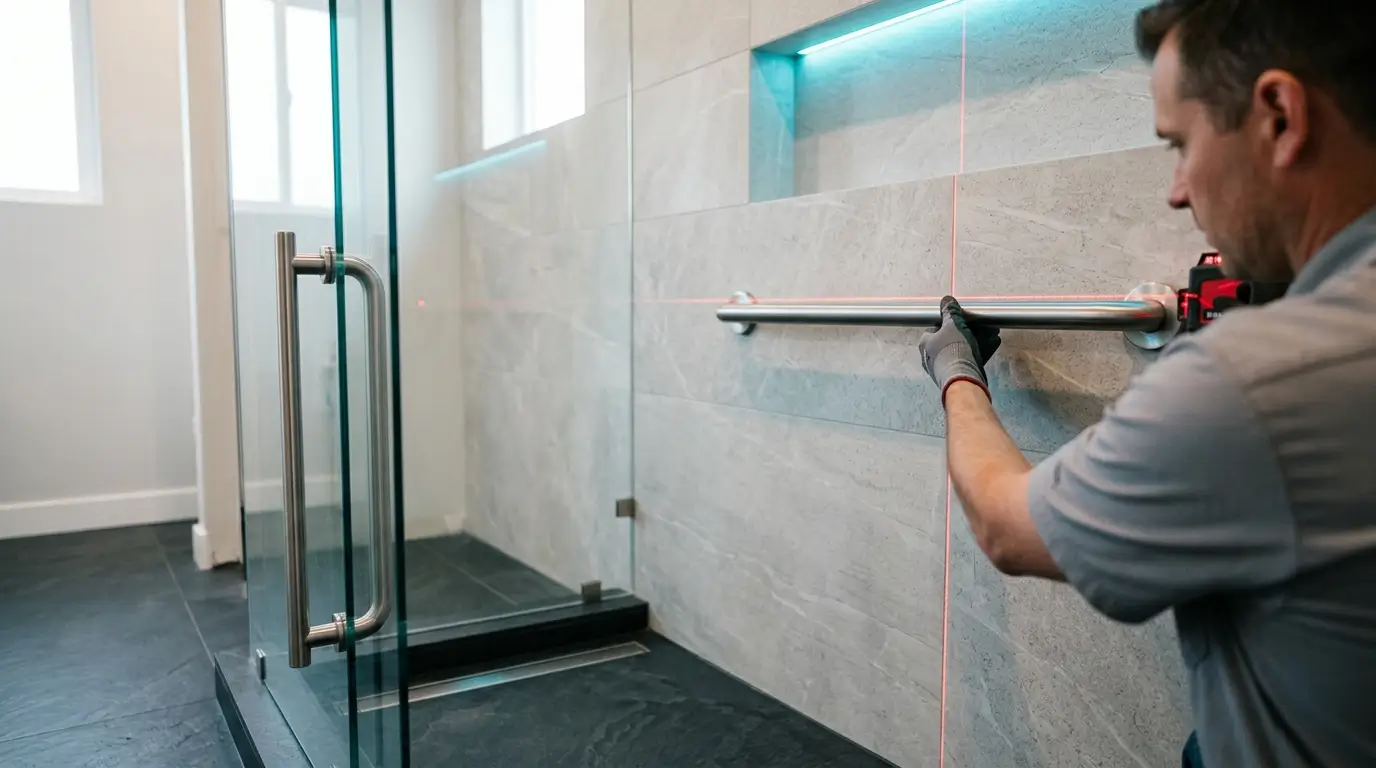
It only takes one slip on a wet shower floor to change everything.
For many homeowners, the bathroom is one of the most overlooked areas for safety, until a close call or injury makes the risk real. Whether you’re planning ahead, caring for a loved one, or simply want more stability in your daily routine, small upgrades like properly placed grab bars can make a big difference.
The right grab bar placement gives you something solid to rely on when stepping into a walk-in shower or bathtub, turning, or standing up from a seated position. However, placement isn’t always obvious, and getting it wrong can limit how helpful those bars actually are.
This guide breaks down exactly where to place grab bars so your space works the way it should and promotes elderly bathroom safety.
The Importance of Proper Grab Bar Placement
Did you know that one in four Americans ages 65+ falls every year, per the National Council on Aging? That’s why so many families opt for accessibility aids in their own homes, especially in slippery bathrooms.
Installing grab bars is all about placing them exactly where your body needs stability. Poor grab bar placement can limit usability, while properly positioned shower grab bars provide balance during standing, turning, and transitioning between positions.
In Utah homes, where many homeowners are planning aging-in-place upgrades, grab bars installed in the right locations support independence without compromising design.
General Guidelines for Shower Grab Bar Placement
Before diving into specific layouts, there are a few foundational principles for shower grab bar placement:
Grab bars should be anchored securely into wall studs whenever possible. If studs are not available, heavy-duty wall anchors rated for load-bearing applications are required.
Under ADA grab bar placement standards, most horizontal grab bar installations are positioned between 33 and 36 inches above the finished floor. This height supports both standing users and those transitioning from a seated position.
Placement should reflect how the shower is used. For example, someone using a shower seat will need different support points than someone standing the entire time.
Slip resistance also matters. Textured finishes on grab bars help improve grip in wet conditions, as can surrounding non-slip flooring materials.
Grab Bar Placement in a Walk-In Shower
A walk-in shower offers flexibility for multiple grab bar configurations, especially in larger layouts or roll-in showers.
Back Wall and Rear Wall Grab Bar Placement
The back wall (also called the rear wall) is one of the most important areas to install grab bars. A rear wall grab bar typically runs horizontally and provides support while standing under the water stream.
A horizontal grab bar along the back wall helps users maintain balance while turning or rinsing. In many cases, horizontal bars are installed across a wide section of the rear wall to allow flexibility in hand placement.
Side Wall Grab Bar Placement
The side wall grab bar plays a major role during entry and exit. This is especially important in a walk-in shower with no threshold.
A vertical bar near the shower entrance gives users something to hold onto while stepping in or out. Vertical grab bars are ideal for transitions and can be paired with horizontal bars for added support.
A horizontal grab bar along the side wall offers stability while standing or shifting weight. This combination of vertical and horizontal bars creates a safer environment overall.
Diagonal Grab Bars for Flexible Support
Diagonal grab bars provide a natural hand position as users move between standing and a seated position. A diagonal bar can feel more intuitive than strictly vertical or horizontal bars.
These are often used in combination with a shower seat, where users need support while lowering themselves or standing back up.
Grab Bar Placement Around a Shower Seat
If your walk in shower includes a shower seat, grab bar placement should focus on accessibility from a seated position.
A rear wall grab bar placed behind the seat provides support for balance while seated. This is especially helpful for users who need to stabilize themselves while bathing.
A side wall grab bar adjacent to the seat allows for easier transitions between sitting and standing. This is where diagonal grab bars or a well-positioned horizontal grab bar can make a noticeable difference.
The goal is to create multiple points of contact so users can safely shift weight without strain.
Grab Bar Placement in Tub-Shower Combos
Traditional tubs require a slightly different grab bar placement strategy in order to be considered ADA-compliant.
A vertical bar near the tub entry point helps with stepping over the tub wall. This is one of the most important safety features in a tub setup.
A horizontal grab bar along the back wall or rear wall provides balance while standing inside the tub.
On the side wall, a wall grab bar can assist with movement and repositioning during bathing.
Because tubs involve a higher step-over risk, proper tub grab bar placement is especially important for bathroom safety.
Considerations for Roll-In Showers
Roll-in showers require careful grab bar placement to accommodate mobility devices and seated use.
Horizontal grab bars should be placed along the rear wall and side wall to allow easy reach from a seated position. Vertical grab bars near the entrance support transfers in and out of the shower area.
Clear spacing is also critical. Grab bars should not interfere with wheelchair access or movement across the shower floor.
Installation Matters: Doing It Right
Even the best grab bar placement won’t help if the installation is weak.
To install grab bars safely:
- They should be anchored into wall studs whenever possible to support full body weight.
- If studs are not available in the desired location, reinforced backing or high-quality wall anchors must be used.
- Grab bars installed incorrectly can loosen over time, which creates serious safety risks.
Regardless of where or how you install your product, professional grab bar installation is the best way to make sure every bar is secure, properly aligned, and ready for real-world use.
Designing for Safety Without Sacrificing Style
Modern grab bars come in a wide range of finishes and styles, allowing them to blend into your bathroom design.
In a walk-in shower, grab bars can double as towel bars or design accents when selected thoughtfully. Placement can still follow safety guidelines while complementing tile layouts and fixtures.
For Utah homeowners upgrading their bathrooms, this means you don’t have to choose between safety and aesthetics.
Final Thoughts: Plan Grab Bar Placement with Purpose
The difference between a bathroom that looks safe and one that actually supports you comes down to placement. Every grab bar should be installed intentionally to support how you move, where you step, and how you transition throughout your space.
If you’re planning a walk-in shower or updating your current bathroom, this isn’t something you want to guess on. The right setup can make daily routines easier, safer, and far more senior-friendly.
At Lifespan Bath Remodel, our team works with Utah homeowners to design and install grab bars as part of complete bathroom upgrades, including walk-in showers built for long-term use. We’re here to make sure everything is above board and actually makes your bathing space safer.
If you’re ready to improve bathroom safety or start planning a more accessible space, contact us today to schedule your consultation. Let’s build a bathroom that works for you now and in the years ahead.
Questions? Talk to a Pro.
We beat any competitor by $100! Call for details. (801) 532-2000
Recent articles
How Proper Waterproofing Protects Your Bathroom Remodel Long Term
Grab Bar Installation Guide: Where to Place Shower and Tub Safety Bars
What to Know Before Installing a Cold Plunge Indoors
How Walk-In Tubs Reduce Fall Risks at Home
How to Maintain Your Bathroom After Remodeling

How to Fix Common Bathroom Design Mistakes in Remodels
Why Walk-In Tubs Are a Must for Aging in Place

Why a Bathroom Remodel Is One of the Best Home Investments
Related Posts
Russ Tychsen
March 18, 2026
How Proper Waterproofing Protects Your Bathroom Remodel Long Term
A bathroom remodel should feel like an upgrade, not something you worry about a few years later. The thing is, many Utah homeowners...
March 14, 2026
Grab Bar Installation Guide: Where to Place Shower and Tub Safety Bars
It only takes one slip on a wet shower floor to change everything. For many homeowners, the bathroom is one of the most...
March 4, 2026
What to Know Before Installing a Cold Plunge Indoors
Cold plunges have quickly moved from niche recovery tools to a mainstream part of at-home wellness routines. What used to be reserved for...