
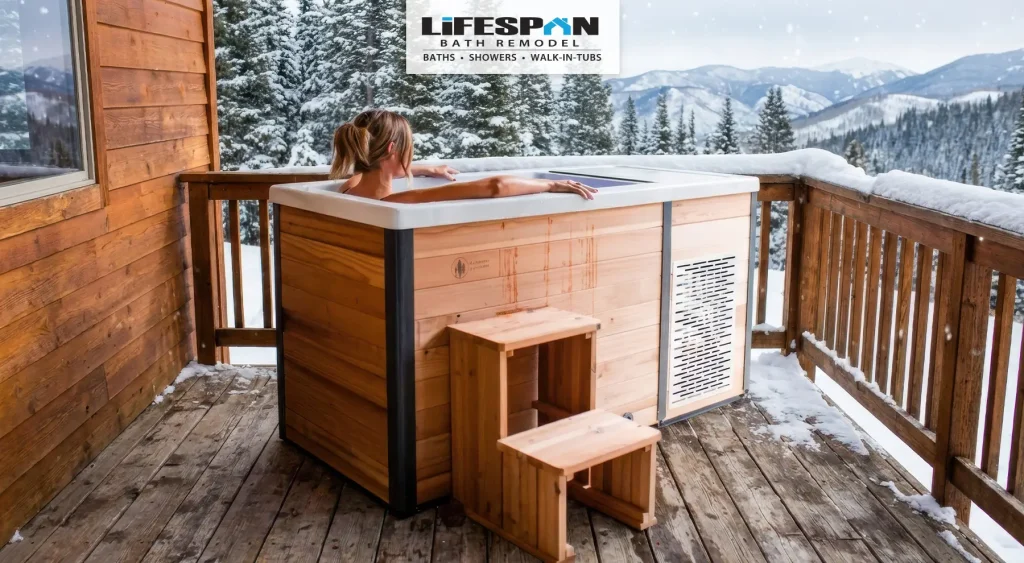
Cold plunges feel great on the body, but a safe bathroom setup is what makes them work at home. If installed without care, that icy dip could turn from a refreshing ritual to risky business.
Interest in home cold-plunge tubs is growing fast. The global market for cold-plunge tubs reached approximately US$ 338.5 million in 2024 and is projected to climb steadily over the coming decade. In North America, residential demand is rising as more homeowners look for wellness and recovery solutions built into their homes.
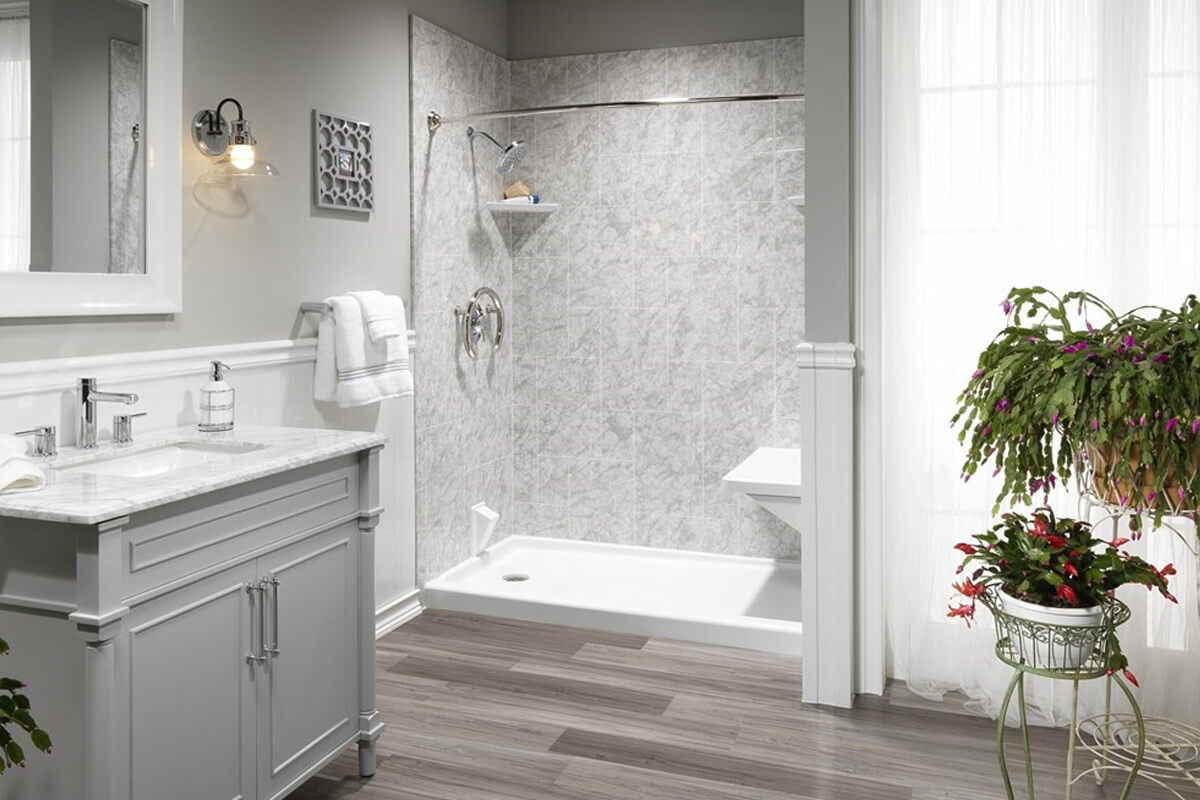
Still, cold plunges and ice baths don’t belong in just any bathroom. A successful (and safe) cold plunge routine depends on thoughtful design: proper flooring, slip-resistant surfaces, secure grab bars, smart drainage, and easy, safe entry/exit for everyone using it. That’s where remodeling matters.
In this article, we’ll explore the following:
- Why cold plunges are becoming a popular at-home wellness option
- The safety and health guidelines every beginner should know
- How to prepare or remodel a bathroom for a cold plunge, from flooring and drainage to grab bars, non-slip surfaces, and layout
- Best practices for gradual cold-water immersion and warming up afterward
- Special considerations for families, seniors, and multigenerational households
- Ongoing maintenance and hygiene tips to keep a home plunge safe and practical
Whether planning a simple tub install or a full remodel, this guide will show how to integrate a cold plunge safely for comfort, recovery, and peace of mind.
Cold Plunge 101: What Beginners Should Know
A cold plunge is exactly what it sounds like: full-body immersion in cold water, usually between 50–59°F, for a short period of time.
Unlike a quick cold shower, the full-body contact creates a faster and more intense physiological response, which is why beginners need to start slow and pay attention to how their body reacts. Cold plunges are popular for muscle recovery, circulation, and that quick “wake-up” effect, but the setup matters as much as the water.
In a home environment, the goal is to create a space where entry, exit, and temperature control are predictable and safe. That means a stable tub, slip-resistant flooring, and clear access around the plunge area, especially if kids, seniors, or anyone with limited mobility will use it.
Health Benefits for Families and Seniors
Cold plunges aren’t just for athletes or sports medicine. Families often enjoy them as a shared wellness routine, and many older adults use regular cold plunges and cold therapy to ease joint stiffness or swelling (with a doctor’s approval).
The key for both groups is consistency and safety:
- Families: Cold plunges can introduce healthy habits, build routine, and create a fun shared activity. Always supervise children closely and limit their time in the water.
- Seniors: Some find relief from pain, inflammation, or circulation issues, but stability and safe access are critical. Handrails, non-slip surfaces, and supportive seating go a long way toward making the experience safe and comfortable.
For all ages, a cold bath and cold water therapy offer mental health benefits.
Choosing a Home Cold Plunge
Home setups range from simple portable tubs to built-in plunge solutions that become part of a remodeled bathroom. Whichever route you choose, look for:
- Durable, easy-to-clean materials
- Non-slip surfaces and sturdy entry points
- Adequate space around the tub for safe movement
- Optional grab bars or seating for anyone with balance or mobility concerns
This is also where a remodel can help: thoughtful placement, smart flooring choices, and clear access all reduce risk and make cold plunging easier for everyone in the home.
Key Cold Plunge Safety Guidelines
Cold water affects the body fast, so beginners need simple, predictable routines that keep the experience safe.
A few clear guidelines make the difference between a refreshing plunge and one that’s too intense.
Cold Plunge Safety Precautions for Beginners
Start with the basics. Check the water temperature every time. Beginners should stay at the higher end of the safe range (55–59°F). Only lower it gradually as your comfort increases.
Never plunge alone your first few times. Having someone nearby helps if you feel lightheaded or chilled too quickly. Ease in slowly. Sit or step in gradually instead of dropping straight into the water.
Warm up gently afterward. Towels, warm beverages, robes, and a warm room help your body temperature adjust. Avoid jumping into a hot shower. Rapid temperature swings can cause dizziness.
The early sessions are about learning how your body responds. Pushing too hard, too fast increases the risk of shock, muscle tightening, or feeling faint.
Health Considerations and Age Factors
Cold immersion isn’t right for everyone. People with heart conditions, circulation or blood flow issues, neuropathy, respiratory concerns, or uncontrolled high blood pressure should speak with a doctor before trying it.
Cold water forces blood vessels to constrict, which can strain certain immune systems or nervous systems. Age also shapes how the body reacts:
- Children lose heat faster than adults. Keep sessions extremely short and always supervise closely.
- Seniors may need help entering and exiting the tub. Grab bars, non-slip flooring, and supportive seating provide stability and reduce fall risk.
Accessible bathroom design becomes a safety feature here. Good layout and reliable support features allow different age groups to use a cold plunge without unnecessary risk.
Preparing Your Home Cold Plunge
A safe cold-plunge routine starts long before the water hits 50°F. The setup matters, especially in a bathroom, where wet surfaces, tight layouts, and limited traction can increase fall risks.
A little planning makes the entire experience safer and easier for daily use.
Selecting the Right Location
Choose a spot that gives you space and stability:
- Flat, even flooring that won’t shift under the tub’s weight
- Reliable drainage so water doesn’t pool or create slippery surfaces
- Clear walking paths for safe entry and exit
- Good lighting to help users see steps, edges, and surrounding surfaces
- Nearby storage for towels, robes, warm clothing, and other essentials
Bathrooms with open layouts, zero-threshold entries, or durable slip-resistant flooring are ideal. Avoid tight corners or spots where the tub blocks doors or creates awkward movement patterns.
Installation Tips for Accessibility
If your cold plunge will be used by kids, seniors, or anyone with balance or mobility challenges, accessibility should guide the design.
- Add grab bars to help with steady entry and exit.
- Use non-slip mats or slip-resistant flooring around the plunge area.
- Consider a walk-in style tub or a portable plunge with a side door for easier access.
- Choose sturdy seating or built-in benches for users who can’t lower themselves into a deep tub.
- Keep warming sources like heated towels or overhead heat lamps nearby to help with cold air, but always at a safe distance from water.
These features support safe daily use and reduce fall risks, making the cold plunge accessible to all ages and abilities.
Cold Plunge Safety Tips for Beginners
Cold immersion is a big shift for the body, especially during the first few sessions. Starting slow helps you build comfort while keeping the experience safe and manageable. With the right approach, you’ll quickly reach the benefits of cold plunges.
Gradual Temperature Adjustment to Avoid Cold Shock Response
Begin at the upper end of the recommended range: 55–59°F. This keeps the initial cold shock manageable and allows your body to adjust over time.
As you get more comfortable, you can lower the temperature in small increments. Here are a few helpful habits for beginners:
- Take a few deep breaths before stepping in the ice water.
- Enter slowly to avoid an overwhelmed respiratory response from vital organs.
- Keep your hands and feet moving gently to help circulation and cardiovascular health.
Some people practice with cool showers before transitioning to a full cold plunge. It’s an easy way to prepare your system for the bigger temperature shift.
Recommended Duration and Frequency
Short ice bath sessions are the safest place to start. Most beginners should aim for:
- 30 seconds to 1 minute for the first plunge
- Add 30-second intervals over several sessions
- A typical range of 2–5 minutes once comfortable
Even experienced users should avoid staying in more than 10 minutes. Longer exposure increases the risk of numbness, delayed reaction time, and hypothermia.
For frequency, 2–3 plunges per week works well for most home users and provides enough consistency to feel benefits without overdoing it.
Always warm up slowly afterward with towels, robes, or a warm (not hot) room.
Supervising Cold Plunge Use for Families
Cold plunges can be a fun family activity, but supervision and structure matter. Kids and older adults react to cold differently, so the environment needs to support safe entry, exit, and timing.
Monitoring Children and Elderly
Children and seniors require extra care because their bodies lose heat faster and they’re more prone to slips or sudden dizziness.
For children:
- Always supervise directly, no exceptions.
- Keep sessions very short (30 seconds–1 minute max).
- Watch for early signs of discomfort: shivering, blue lips, or reluctance to stay in.
- Use a timer so sessions stay consistent and predictable.
For seniors:
- Provide support during entry and exit, especially if balance is a concern.
- Use secure grab bars and non-slip flooring to reduce fall risk.
- Limit time in the water and warm up slowly afterward.
- Watch for numbness in hands or feet, which can make stepping out unsafe without assistance.
Bathroom safety features make a meaningful difference here. Proper flooring, railings, and lighting help everyone use the plunge confidently.
Emergency Response Planning
A home plunge should always have a simple emergency plan in place. Make sure:
- A charged phone is within reach.
- Family members know how to help if someone gets too cold or lightheaded.
- You can recognize warning signs of overexposure: confusion, pale or bluish skin, dizziness, or shallow breathing.
- Emergency numbers are posted somewhere visible in the bathroom.
You don’t expect to need these steps, but having them in place keeps the routine safe for all ages.
Maintaining Cold Plunge Safety
A safe cold-plunge setup is an ongoing routine. Regular upkeep makes the experience cleaner, safer, and more predictable for everyone using the tub.
Hygiene and Water Care
Cold plunge water can get cloudy or contaminated quickly, especially with frequent use. Keep the water fresh and the space sanitary with simple habits:
- Replace the water every 1–3 days if you’re using the plunge often.
- Rinse off lotions, dirt, or sunscreen before entering. It keeps the water cleaner longer.
- Use mild, bath-safe cleaners to wipe down surfaces, especially if kids or seniors are using the tub.
- If you plunge daily, consider a small pump or filter system to maintain water clarity.
Good water hygiene helps reduce irritation and makes the routine safer for sensitive skin.
Regular Safety Checks
A cold plunge adds weight, moisture, and regular foot traffic to your bathroom. Take a few minutes each week to look for:
- Loose handrails or grab bars
- Slippery surfaces, worn mats, or buildup on tile
- Leaks around the tub or plumbing connections
- Temperature controls that drift or don’t stay consistent
- Standing water anywhere around the plunge area
Addressing small issues early helps prevent slips, falls, or unexpected cold-water exposure.
Bringing Cold Plunges Into a Safer, More Comfortable Bathroom
A home cold plunge can be a great addition to your wellness routine, especially when the space around it is designed for comfort and safety.
With the right temperature habits, smart supervision, and a bathroom layout that supports stable footing and easy access, cold plunging becomes something families and seniors can enjoy with confidence.
If you’re thinking about adding a cold plunge to your home, or upgrading your bathroom to make daily routines safer, Lifespan Bath Remodel can help you create a space that supports wellness for all ages. From slip-resistant flooring to accessible tub designs and secure grab bars, the right updates make cold plunges easier to use and safer all year long.
Ready for the next step? A safer, more comfortable bathroom starts with the right plan. Contact us today!
Questions? Talk to a Pro.
We beat any competitor by $100! Call for details. (801) 532-2000
Recent articles

How to Fix Common Bathroom Design Mistakes in Remodels
Why Walk-In Tubs Are a Must for Aging in Place

Why a Bathroom Remodel Is One of the Best Home Investments
How to Prepare Your Home for a Bathroom Renovation

What to Expect During a Bathroom Remodel: Step-by-Step
How to Choose the Right Vanity for Your Bathroom

Custom Bathroom Remodel vs Prefab Remodel: Which Is Better for Your Home?
How Scandinavian Bathroom Design Brings Calm to Modern Baths
Related Posts
Russ Tychsen
February 11, 2026
How to Fix Common Bathroom Design Mistakes in Remodels
Planning a bathroom remodel is exciting. You start gathering bathroom design ideas, saving inspiration photos, choosing tile samples, and picturing what the finished...
February 6, 2026
Why Walk-In Tubs Are a Must for Aging in Place
For years, you probably never gave your bathtub a second thought. You step in and step out with little to no hesitation. But...
January 27, 2026
Why a Bathroom Remodel Is One of the Best Home Investments
Let’s talk about bathrooms: the room you visit first thing in the morning and the last place you stand before bed. When it...